By Macdonald Realty
We get asked constantly what actually separates Vancouver's downtown neighbourhoods, since from a distance they can look fairly similar: high-rise condos, waterfront proximity, and easy access to the core. Once you look closer, though, Yaletown, Coal Harbour, the West End, and the Downtown core each offer a real, different day-to-day experience. Here's what we think buyers should understand about how these four areas actually differ.
Key Takeaways
- Yaletown blends a converted warehouse district with newer waterfront towers along False Creek
- Though you may not guess it from its name, Coal Harbour is an ultra-luxury zone with outstanding water and mountain views
- The West End tends to offer more accessible pricing, tied partly to its older building stock
- The Downtown core centres on hotels, major shopping, and high-rise residential living
Yaletown: From Warehouse District to Waterfront Living
Once an industrial warehouse district, Yaletown is now largely a home of young professionals. Over the years, it’s transformed into one of the city's more distinctive neighbourhoods, blending heritage brick buildings with newer glass towers along False Creek. The seawall runs along the water here, connecting green spaces like David Lam Park and George Wainborn Park, and the area is known for its restaurants, boutiques, and street-level activity. A piece of the neighbourhood's industrial history is still on display at the Roundhouse Community Centre, home to Engine 374, the locomotive that pulled the first transcontinental passenger train into Vancouver in 1887.
What Sets Yaletown Apart
- A mix of heritage warehouse conversions and newer waterfront towers
- Seawall access connecting David Lam Park and George Wainborn Park
- A strong concentration of restaurants, boutiques, and street-level activity
- Historic ties still visible through landmarks like the Roundhouse Community Centre
Coal Harbour: A Quieter Waterfront Alternative
Coal Harbour sits between the downtown financial district and Stanley Park, but it carries a noticeably quieter, more residential character than that location might suggest. The neighbourhood is known for waterfront towers, an active marina specializing in yachting activities and services, and direct seawall access, with upper-floor units in many buildings capturing views of Burrard Inlet and the North Shore mountains. This is a meaningfully different pace than Yaletown's more active street life, even though the two neighbourhoods sit relatively close together on the downtown peninsula.
What Sets Coal Harbour Apart
- A quieter, more residential feel despite its central downtown location
- Ultra-luxury real estate with prime water and mountain views alongside a working marina, and direct seawall access
- Upper-floor units in many buildings capture inlet and mountain views
- A noticeably different pace than Yaletown, despite the short distance between them
West End: Character, Green Space, and More Accessible Pricing
The West End offers a mix of older heritage buildings, mid-rise apartments, and newer developments, with tree-lined streets and easy access to English Bay Beach and Stanley Park. The neighborhood is home to Davie Street Village, the historic heart of Vancouver’s LGBTQ+ community.
Most of the neighbourhood's towers date to the 1960s and 1970s, a period of intensive high-rise construction, which generally means more accessible pricing compared to Yaletown or Coal Harbour, though often paired with more dated interiors and mechanical systems. For families, the neighbourhood includes established schools like Lord Roberts Elementary and King George Secondary, adding a practical dimension beyond lifestyle alone.
Most of the neighbourhood's towers date to the 1960s and 1970s, a period of intensive high-rise construction, which generally means more accessible pricing compared to Yaletown or Coal Harbour, though often paired with more dated interiors and mechanical systems. For families, the neighbourhood includes established schools like Lord Roberts Elementary and King George Secondary, adding a practical dimension beyond lifestyle alone.
What Sets the West End Apart
- A mix of heritage buildings, 1960s and 1970s high-rises, and newer developments
- Tree-lined streets with easy access to English Bay Beach and Stanley Park
- Generally more accessible pricing tied to an older building stock
- Established schools, including Lord Roberts Elementary and King George Secondary
Downtown Core: Hotels, Shopping, and High-Rise Living
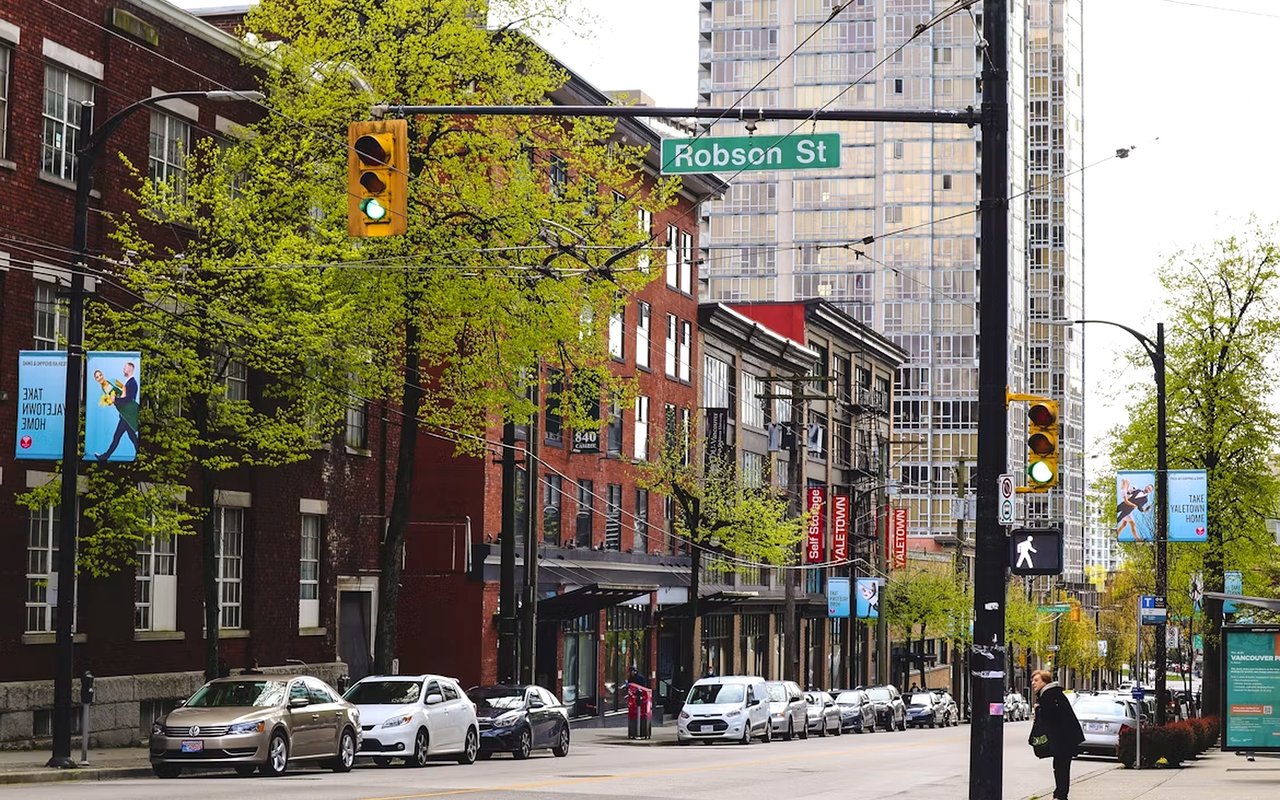
The Downtown core is anchored by major hotels, including the Shangri-La, Rosewood Hotel Georgia, and several Fairmont properties, several of which include residential units with dedicated entrances and concierge service. Major shopping districts, including Pacific Centre and Robson Street, sit within this same area, along with a concentration of office towers that gives the neighbourhood its busy, central character. This is generally the most urban and continuously active of the four neighbourhoods, day and night.
What Sets the Downtown Core Apart
- Anchored by major hotels, some with attached residential units
- Home to major shopping districts like Pacific Centre and Robson Street
- A significant concentration of office towers alongside residential buildings
- The most continuously active of the four neighbourhoods, day and night
What These Differences Actually Mean for Buyers
Choosing between these four neighbourhoods often comes down to pace as much as price, since each offers a real, different daily rhythm even within the same general downtown area. Building age matters too, since older buildings in areas like the West End can mean lower maintenance fees but more upcoming capital work, while newer Yaletown and Coal Harbour towers may carry higher fees tied to more extensive amenities. We always recommend reviewing a building's strata documents closely, since maintenance fees and building condition can vary significantly even within the same neighbourhood.
What to Weigh Before Deciding
- Daily pace and character differ meaningfully across all four neighbourhoods
- Building age affects both price and ongoing maintenance fees
- Older buildings may have lower fees now but more capital work ahead
- Reviewing strata documents closely matters regardless of which area you choose
FAQs
Which of these neighbourhoods is the quietest?
We'd generally point to Coal Harbour first, given its more residential character despite the central location. The West End can also feel quieter, especially away from Denman Street's main commercial strip.
Is the West End really more affordable than Yaletown or Coal Harbour?
Generally, yes, largely tied to its older building stock. That said, we always recommend looking at specific buildings and units rather than assuming based on the neighbourhood alone.
Does building age actually matter that much when buying a condo here?
It does, yes. Older buildings can mean lower maintenance fees today but larger capital expenses down the road, so we always recommend reviewing the strata documents carefully before making a decision.
Contact Macdonald Realty Today
Understanding what actually separates these downtown neighbourhoods is something we walk buyers through carefully, since the right fit depends on more than just price. We're happy to talk through which of these areas actually matches what you're looking for.
Reach out to Macdonald Realty, and let's talk about finding your place in downtown Vancouver.
Reach out to Macdonald Realty, and let's talk about finding your place in downtown Vancouver.